June 2nd, 2026
Where to Build in Bali: Uluwatu vs Canggu vs Ubud
The most important decision you make when you build a villa in Bali is location, more important than the architect you choose or the contractor you hire. The same villa, built to the same specification at the same cost, will perform very differently depending on where it sits. If you are deciding where to build a villa in Bali, this is the comparison to read before you commit to any land. Below we break down the three areas foreign investors ask about most, Uluwatu, North Canggu, and Ubud, with realistic occupancy, land cost, build cost, and ROI for each, plus the honest caveat that the glossy brochures leave out.
Why location matters more than the build
A beautifully built villa in the wrong micro-location underperforms a good villa in the right one, every time. Location drives nightly rate, occupancy, and land appreciation simultaneously, and those three factors compound. The cost to build a villa in Bali is broadly similar across these areas at the same specification; what changes dramatically is the land price you pay going in and the return you earn coming out. Get the location right and the build pays for itself faster and appreciates harder.
Uluwatu: Bali’s premium coastal market
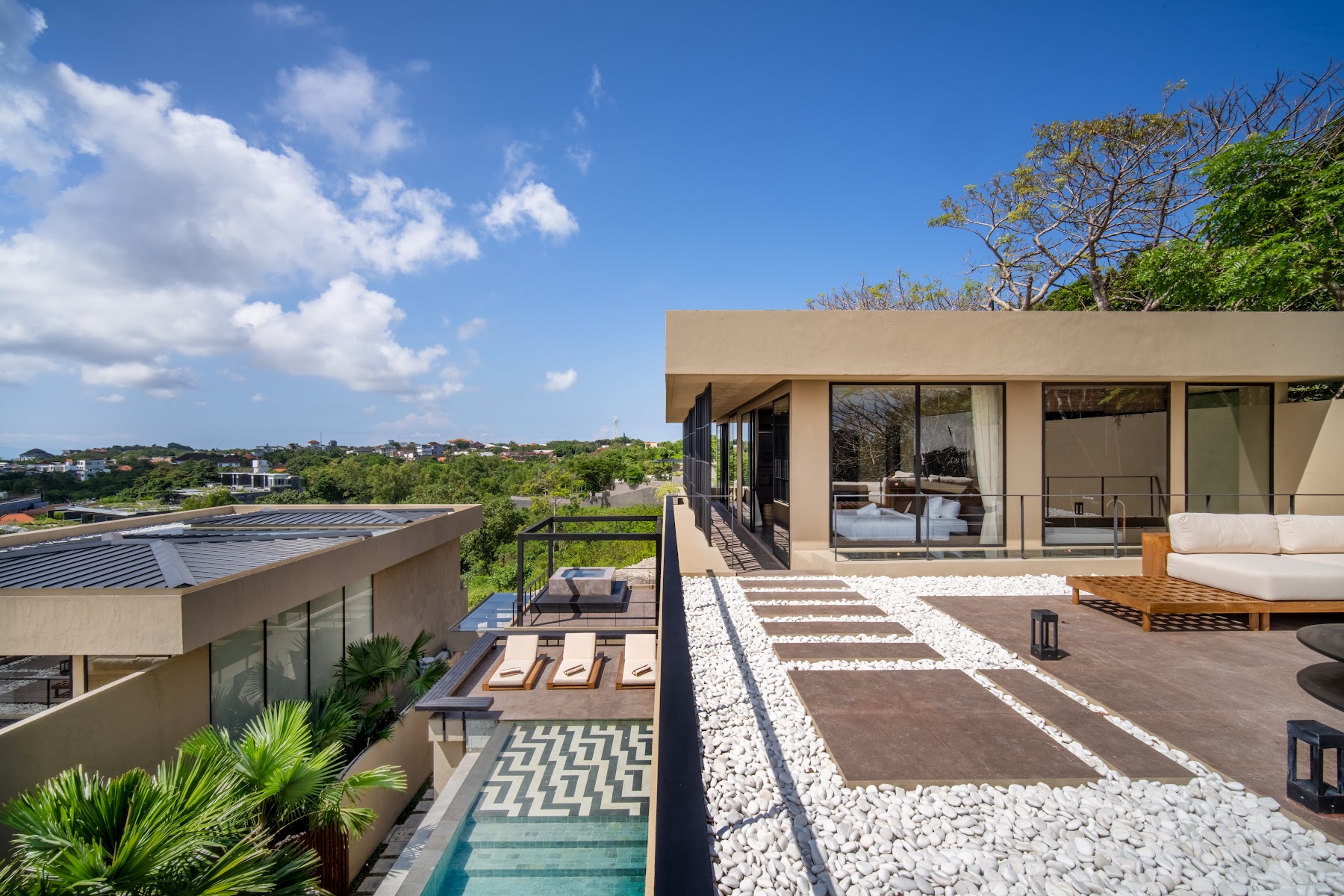
Uluwatu is the premium end of the market: limestone cliffs, world-class waves, and a visitor profile skewed toward higher-spending international travellers. Prime villas consistently achieve 75–90% occupancy, and a quality 3-bedroom commands average nightly rates above IDR 7.1 million (≈ $400). Land has appreciated 15–20% annually over the past five years. When you build a villa in Bali here, you are buying into proven demand and proven appreciation at the same time. Several of our delivered projects, including our cliffside villas, sit in exactly this market.
- Land cost: 25M IDR per ARE per year (1 ARE = 100 sqm); about $105,000–$140,000 for a 3–4 ARE (300–400 sqm) plot on a 25-year lease
- All-in to build a 3-bedroom: IDR 8–9.8 billion (≈ $450,000–$550,000)
- Realistic annual ROI: 12–20%
- Best for: income-first investors and ocean-view buyers
- Honest caveat: buildable land near the coastline is genuinely scarce, and the window for accessible entry prices in prime micro-locations is narrowing fast.
North Canggu: Seseh and Kedungu
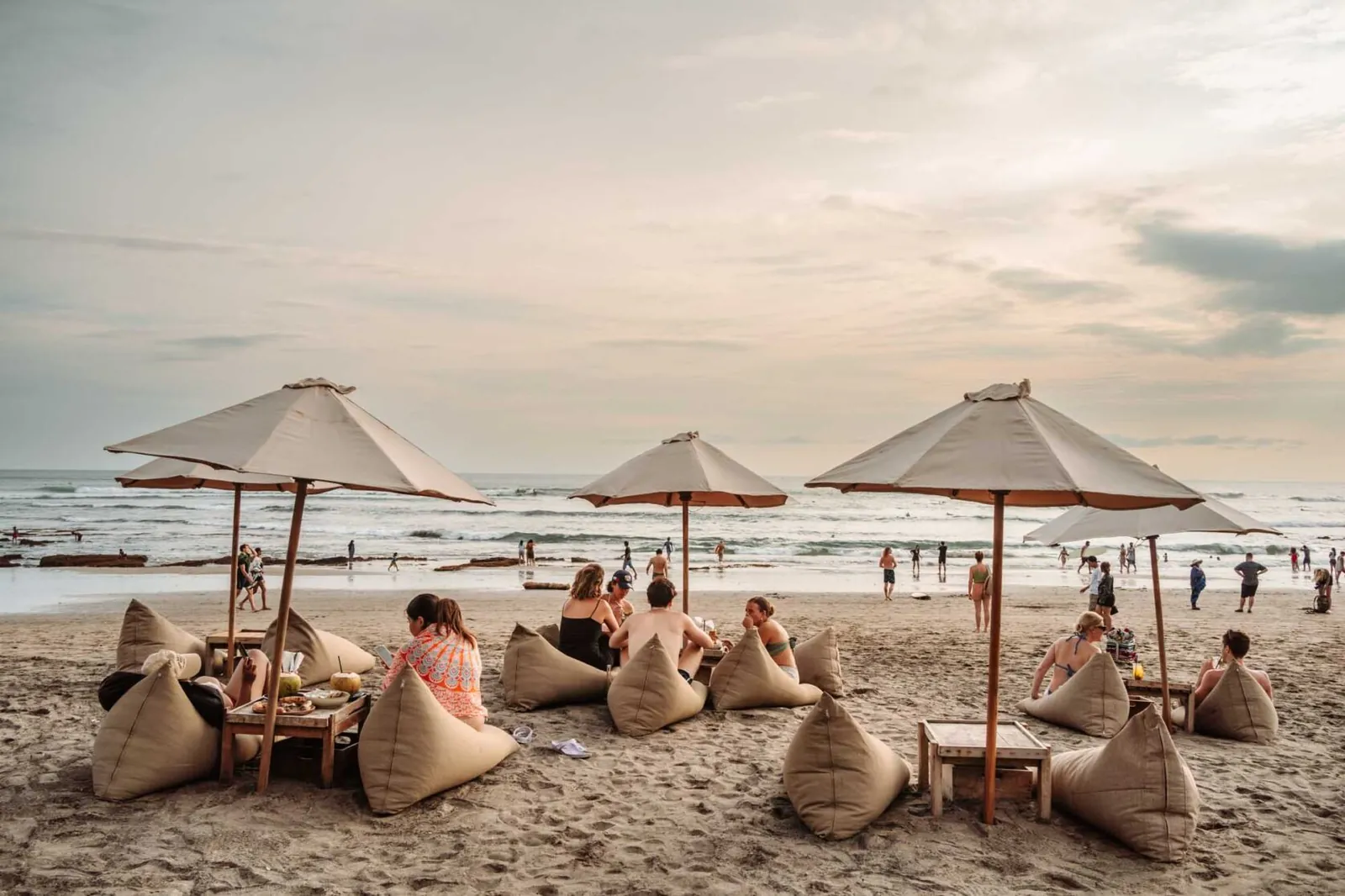
Central Canggu is Bali's most developed hub and also its most saturated. The smarter play in 2026 is North Canggu, Seseh and Kedungu, 10–20 minutes north on the same coastline, with beach access and the same coastal culture but without the congestion or the price. Land here runs well below comparable central Canggu plots, which means the same budget that buys a cramped 2-bedroom in contested Canggu streets lets you build a villa in Bali with a full 3-bedroom footprint and better positioning.
- Land cost: 15–20M IDR per ARE per year; about $63,000–$110,000 for 3–4 ARE (300–400 sqm) on a 25-year lease
- All-in to build a 3-bedroom: IDR 5.2–7.1 billion (≈ $290,000–$400,000)
- Best for: early-mover capital-appreciation investors
- Honest caveat: this is an emerging area, not an established one. Expect land appreciation first and income second; buy here for the 5–7 year curve, not for instant peak occupancy.
Ubud: year-round demand without the coast
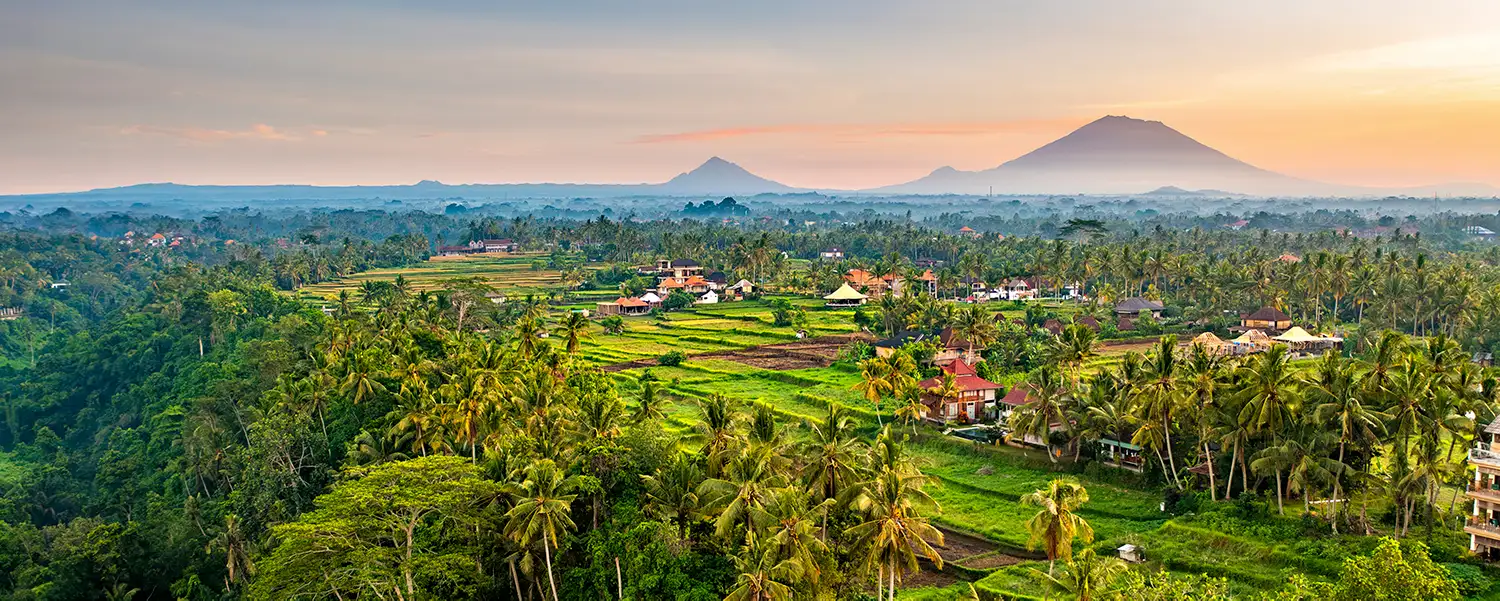
No ocean, but Bali's most loyal visitor profile. Wellness retreats, meditation centres, and rice-terrace views draw longer-staying, higher-spending travellers throughout the year, and because that demand is not weather-dependent, occupancy holds up in months when coastal areas dip. For investors who want the most accessible entry point to build a villa in Bali with dependable year-round returns, Ubud is hard to beat.
- Land cost: 8M IDR per ARE per year; about $33,000–$45,000 for 3–4 ARE (300–400 sqm) on a 25-year lease
- All-in to build a 3-bedroom: IDR 4.1–5.9 billion (≈ $230,000–$330,000)
- Realistic annual ROI: 12–20%
- Best for: accessible-entry investors and reliable year-round occupancy
- Honest caveat: not the right market for guests who want to walk to the beach.
Match the area to your guest profile
The clean way to decide is to start from the guest you want, because the guest sets the nightly rate. Uluwatu attracts surfers, couples and small groups paying premium rates for cliffs and sunsets. Canggu and its northern coast draw digital nomads and social travellers who stay longer and book year-round. Ubud owns the wellness market: retreats, yoga groups and longer stays that do not care about beach access. A villa designed for the wrong guest in the right area still underperforms, which is why we design each project around the area's dominant demand rather than a generic template. Browse the gallery to see how differently the same budget can express itself by location.
What it costs to build a villa in Bali by area
At standard-to-premium specification, bali villa construction runs 16 to 30 million IDR per m² (about $900–$1,650) regardless of which of these three areas you choose; the build cost is broadly constant. What is not constant is the land. A coastal Uluwatu plot costs three times an equivalent plot in Ubud, and that single difference is what separates a IDR 3.3 billion (≈ $183,000) Ubud project from a IDR 8.2 billion (≈ $460,000) Uluwatu one. This is why the location decision dominates the build decision: you are not really choosing between three construction budgets, you are choosing between three land markets and three demand profiles. For the full numbers, see our complete cost to build a villa in Bali breakdown.
So where should you build a villa in Bali?
There is no single best area to build a villa in Bali; there is the right area for your capital and your objective. Choose Uluwatu for premium income and proven appreciation, North Canggu to enter early on the strongest land-value story on the island, and Ubud for the most accessible entry and the steadiest year-round demand. Match the location to your goal first; then optimise the build to suit it.
Emerging areas worth watching
Beyond the big three, a handful of emerging areas reward investors willing to build a villa ahead of the curve. Amed, on Bali's quiet northeast coast, is a diving and freediving destination of dramatic black-sand bays where land still sells for a fraction of the south. Candidasa, further along the east coast, pairs a calm seafront with easy access to East Bali's cultural sites and a small but growing base of boutique stays. And Lombok, Bali's neighbour to the east, is opening up quickly around Kuta Lombok and the Mandalika circuit, where infrastructure investment is drawing in early developers. The trade-off in all three is the same one that applies to North Canggu, only sharper: you are buying land appreciation and a developing market rather than established peak demand. For first-movers with patience and a long horizon, these areas can deliver the strongest land-value gains available, provided the build quality is high enough to attract the guests who travel off the mainstream itinerary.
What drives ROI beyond location
Location sets the ceiling on your return, but four things decide whether you reach it. Micro-location within an area matters enormously. An ocean view or cliff position commands a 30–50% nightly-rate premium over the same villa 500 metres inland. Design and build quality matter next: a photogenic, well-built villa consistently earns 20–30% higher rates than a generic one, which is the entire argument for a custom build over an off-the-shelf unit. Professional management is the third lever, easily worth its 15% fee in the occupancy difference between a well-run and a poorly-run villa. And seasonality discipline is the fourth: operators who adapt pricing to off-peak demand hold occupancy that lazier owners lose. Get the location right, then execute on all four, and a well-built villa in a prime Bali area realistically returns 12–20% net annually.
From shortlist to secured plot
Once the area is chosen, the process moves in a fixed order: define the brief (budget, bedrooms, view, guest profile), shortlist plots through local networks rather than public listings, walk the finalists, place a refundable notary deposit on the winner (Genesis Bali's own legal team handles the notary side), then run the full 12-point due diligence before any further money moves. The legal structure that will hold the land, explained in freehold vs leasehold and PT PMA vs nominee, should already be in motion in parallel, so the deal never waits on paperwork.
Build in the right area with Genesis
Choosing the right area is only the first decision; sourcing the land, verifying it, designing for the location, and building to a standard that actually performs is the rest. This is exactly why Genesis Bali exists. We have the knowledge, the resources, the local connections, and the team in place to find your plot in the right micro-location and build your villa there end to end, without the risk of getting any of it wrong. See how our turnkey process works or book a free consultation to talk through your target area.
Frequently Asked Questions
Which area of Bali has the best ROI for a villa?
Uluwatu leads for proven income and appreciation, with realistic net returns of 12 to 20% per year. North Canggu trades some immediate income for stronger land appreciation, and Ubud delivers the steadiest year-round occupancy at the lowest entry price.
What is the cheapest area to build a villa in Bali?
Ubud, with land around 8M IDR per ARE per year (1 ARE = 100 sqm; $33,000 to $45,000 for a 25-year lease) and a complete 3-bedroom project from around IDR 4.1 billion (≈ $230,000). Emerging areas like Amed, Candidasa and Lombok can go lower still, in exchange for a younger market.
Is Canggu still a good place to invest?
Central Canggu is saturated and expensive. The smarter 2026 entry is North Canggu, Seseh and Kedungu, 10 to 20 minutes north: the same coastline, meaningfully cheaper land, and the strongest land-value story on the island.
Should I choose the land before the villa design?
Yes. The plot's zoning, shape and view determine what you can build and what it will earn. That is why Genesis sources and verifies the land first, then designs the villa for it.
Share this story: