June 7th, 2026
Build a Villa in Bali as a Foreigner (2026 Guide)
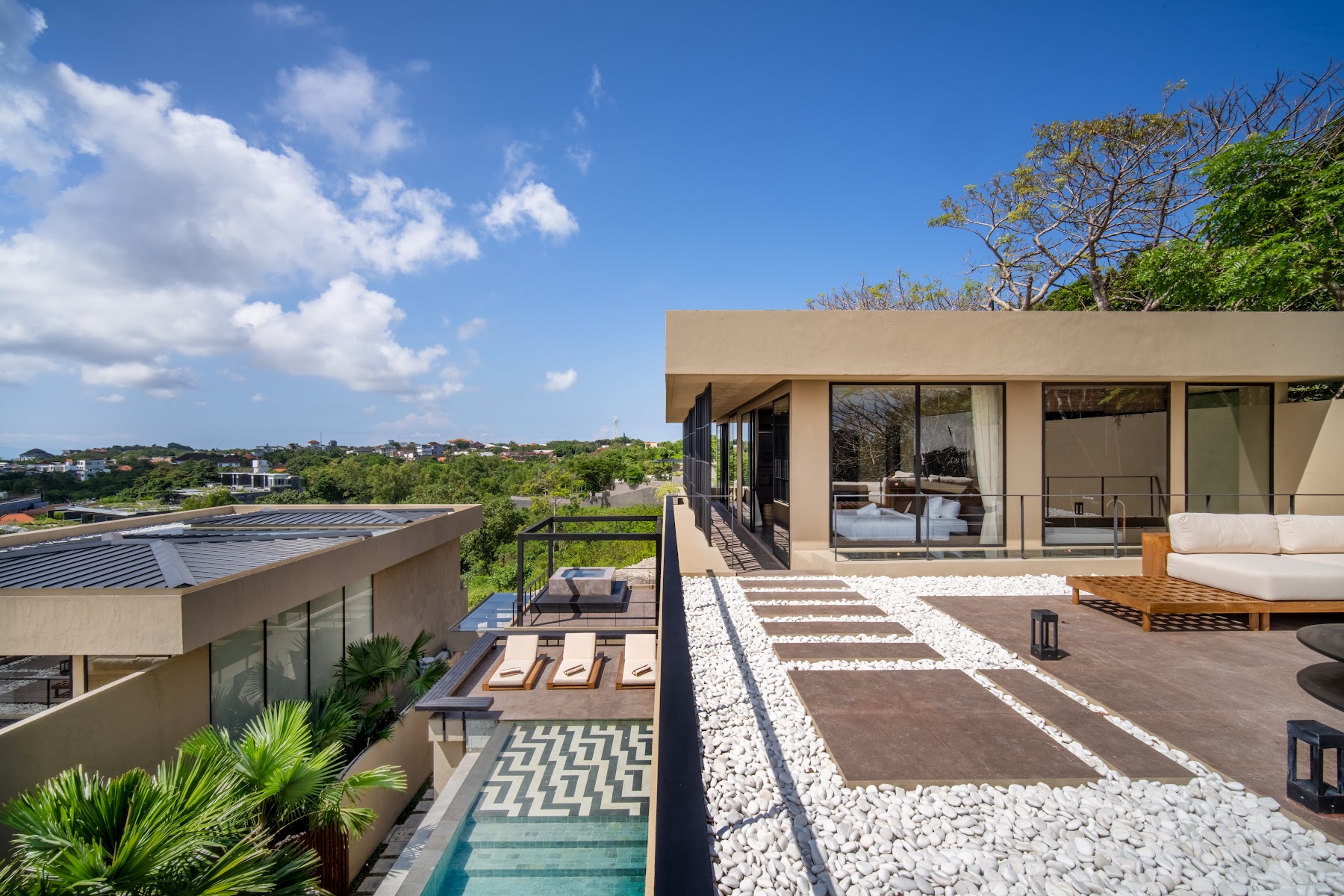
If you want to own property in Bali, you have two routes: buy a finished villa from someone else, or build a villa in Bali yourself on land you secure. This guide is about the second route, because building consistently delivers better value than buying existing. You enter at land price rather than finished-villa price, you control every specification, and you end up with an asset built for today's market rather than one designed five or ten years ago. A well-built 3-bedroom villa in Bali, including land, costs between IDR 5.3 and 8.2 billion (≈ $300,000 and $460,000) depending on the area. Below is the complete, honest breakdown of how to build a villa in Bali as a foreigner in 2026: the legal structure, the land, the real cost to build a villa in Bali, the timeline, and the mistakes that cost people money.
Can foreigners build a villa in Bali?
Yes, with one important distinction that almost every first-time investor gets wrong. A foreigner can hold a leasehold in their personal name and build a villa on that land. What a foreigner cannot do in their personal name is legally operate that villa as a business and collect income from it. To do that, to take income, employ staff, and stay tax-compliant, you need a PT PMA, a foreign-owned company registered under Indonesian law. For anyone planning to generate a return rather than simply hold a private home, the PT PMA is not optional. It is the legal foundation that the rest of the project is built on, so it comes first. See our full guide to the PT PMA legal structure to understand exactly what it involves and why a nominee arrangement is never a safe substitute.
Why build a villa in Bali instead of buying a finished one?
Three reasons, in order of importance. First, price: when you build a villa in Bali you buy raw land at land value, not the marked-up price of a completed property where the seller has already taken their margin. Second, control: a custom build lets you specify the layout, the materials, and the finish that actually perform, rather than inheriting someone else's compromises. Third, differentiation: Bali's market rewards distinctive, well-designed villas and punishes generic ones, so a thoughtfully built villa earns a stronger return than an off-the-shelf unit in a crowded development. The trade-off is involvement and time, which is exactly why most foreign owners engage a villa builder in Bali to manage the process end to end rather than coordinating architects, notaries, and contractors from another continent. How to choose that partner is covered in our guide to choosing a villa builder in Bali. Genesis Bali has its own legal team in-house, so the legal and notarial side never has to be sourced separately.
Step 1: Set up your PT PMA
Before you commit to any land or commission a single drawing, establish your legal structure. PT PMA registration typically takes 2–4 weeks and covers company formation, tax registration, and bank account setup. And a note many investors find reassuring: the entire setup, including the company bank account, can be handled remotely through power of attorney, so nothing requires you to fly in. Budget 35M IDR, about $1,950 one-time, professional fees included. Genesis Bali has its own legal team that runs the whole setup for you. Getting this in place first means that when the right plot appears, you can move on it immediately rather than scrambling to form a company while another buyer circles.
Step 2: Find and check the land
Land sourcing in Bali works nothing like a Western property market. There is no reliable public listing database, and the best plots almost never reach open advertising. They move through local networks and relationships. Once you identify a plot, full due diligence is essential before any money changes hands beyond the deposit. One local convention surprises foreigners: landowners do not release official documents until a notary deposit has been placed. This is standard practice, not a red flag. The deposit is held by a certified PPAT notary and is fully refundable if due diligence uncovers a problem. Our own legal team coordinates the deposit and the notary from start to finish. See the 12 checks we run on every plot before buying land in Bali for the complete process.
Step 3: Design and plan approvals
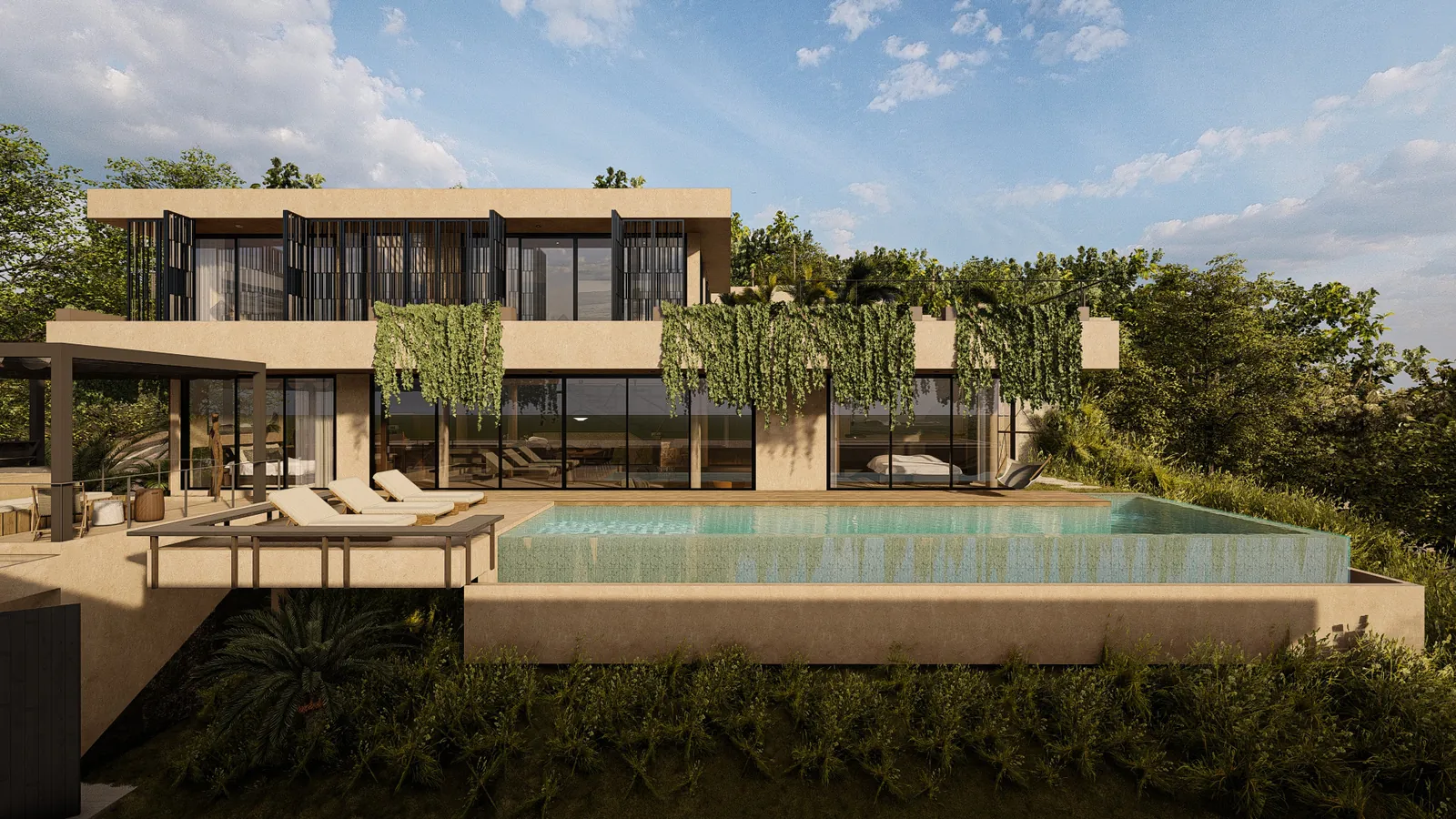
With the land secured, an architect develops your concept through three stages: concept design, schematic plans, and photorealistic 3D renders, each approved by you before the next begins and before any construction starts. Allow roughly 3 months for a proper design phase; rushing it is one of the most expensive mistakes you can make. Every villa requires a SLF certificate, applied for during the construction phase, and the land must be correctly zoned for your intended use. The SLF certifies the finished building fit for use and matters to your rental license later.
What does it cost to build a villa in Bali per m²?
This is the question everyone asks, so here is the honest answer, in the currency Bali actually prices in. Quality bali villa construction in 2026 runs between 16 and 30 million IDR per m² depending on specification (about $900 to $1,650 at the July 2026 rate). Standard spec, solid quality with good local materials, sits at 16–20M IDR/m², about $900–$1,100. Premium spec, with complex architecture, imported materials, and high-end finishes, runs 20–30M IDR/m², about $1,100–$1,650. The villa construction cost in Bali per m² is the single biggest line in your budget, but it is also where the difference between a forgettable villa and a high-performing one is decided. When you compare quotes, never compare per-m² numbers in isolation. Some exclude the pool, landscaping, MEP (mechanical, electrical, plumbing), and permits. Always ask for a full Bill of Quantities so you are comparing like for like. The full budget stack, land to furnishing, is in our cost to build a villa in Bali breakdown.
Step 4: Construction
A well-built 3-bedroom villa in Bali, including land, construction, pool, and landscaping, typically totals IDR 5.3 to 8.2 billion (≈ $300,000 to $460,000) depending on the area. Construction itself runs 10–14 months depending on scale and complexity. Quality control during this phase is where projects are won or lost: consistent site supervision, a clear payment schedule tied to verified milestones, and a contractor with a verifiable track record matter more than the headline price. This is the core of what a professional villa construction management service in Bali provides, protecting your capital while the build progresses, especially if you are not on the ground daily. The cost to build a villa in Bali is predictable when it is managed properly and unpredictable when it is not.
Managing the build from abroad
Most of our clients are in Europe or Canada while their villa rises in Bali, and the project is structured for exactly that. Three mechanisms make remote ownership safe. First, milestone payments: money is released only when a defined stage is verified complete, never on a calendar. Second, reporting cadence: weekly photo and video updates from the site, plus a monthly progress report against the timeline and budget. Third, independent verification: you, or anyone you appoint, can audit progress against the Bill of Quantities at any moment. Nothing in the process requires you to be in Indonesia; owners visit when they want to see their villa taking shape, not because a step demands it. That is the heart of our turnkey service.
A realistic month-by-month timeline
- Months 0–1: strategy, budget frame, PT PMA registration underway
- Months 1–3: land shortlist, site visits, deposit, full due diligence
- Months 3–6: architecture in three stages, material and finish selections
- Months 6–16: construction, from earthworks to structure, MEP, pool and finishes
- Months 16–17: SLF certification, snagging and corrections
- Months 17–18: furnishing, styling, photography, listing and first bookings
Stages overlap in practice, which is how the total stays inside 12 to 18 months rather than stretching to two years.
Step 5: Furnishing and launch
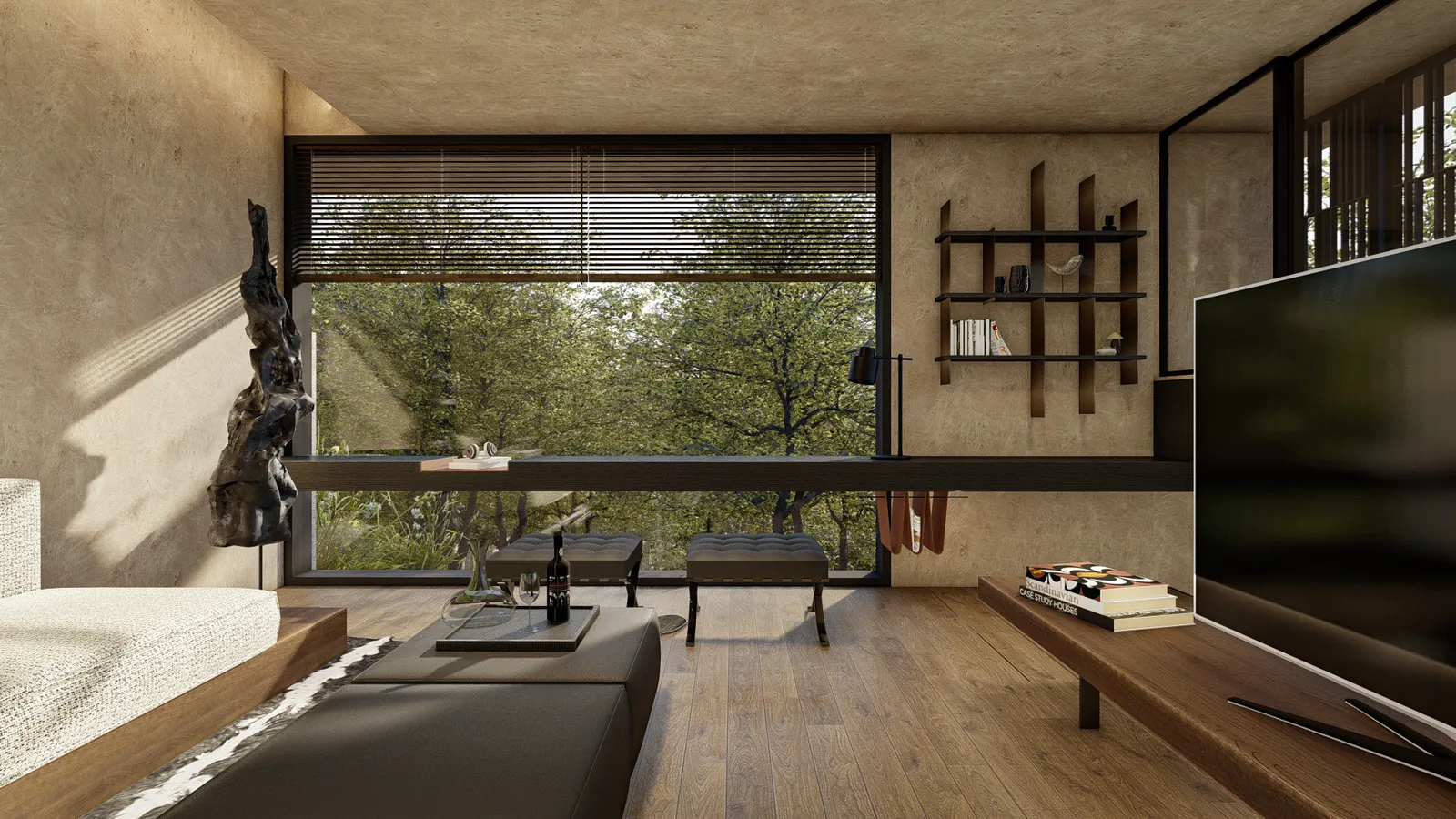
Custom furnishing adds IDR 355 million–1.16 billion+ (≈ $20,000–$65,000+) depending on specification, and it is the phase most people underestimate. Catalogue furniture does not fit Bali villas, does not survive the climate, and does not photograph well enough to command premium rates. Custom pieces in teak and solid hardwood, dimensioned to the space and built for humidity, pay for themselves many times over in performance. Before you reach this stage, make sure you understand freehold vs leasehold in Bali and the taxes you will pay as a foreign villa owner. Both decisions are far cheaper to get right at the start than to fix later. For the standard we furnish to, browse the gallery.
Total cost to build a villa in Bali: worked examples
- 2-bedroom villa (130 m²), Ubud: land IDR 590M (≈ $33K) + construction IDR 2.2B (≈ $123K) + legal/permits IDR 125M (≈ $7K) + furnishing IDR 355M (≈ $20K) ≈ IDR 3.3B (≈ $183,000)
- 3-bedroom villa (200 m²), North Canggu: land IDR 1.5B (≈ $85K) + construction IDR 3.6B (≈ $200K) + legal/permits IDR 125M (≈ $7K) + furnishing IDR 550M (≈ $31K) ≈ IDR 5.7B (≈ $323,000)
- 3-bedroom villa (200 m²), Uluwatu (ocean view): land IDR 2.5B (≈ $139K) + construction IDR 4.75B (≈ $267K) + legal/permits IDR 125M (≈ $7K) + furnishing IDR 835M (≈ $47K) ≈ IDR 8.2B (≈ $460,000)
Entry points in Ubud or emerging areas start from around IDR 3.2 billion (≈ $180,000) for a 2-bedroom, while a prime Uluwatu 3-bedroom realistically runs IDR 8–9.8 billion (≈ $450,000–$550,000) all-in. Where you build moves these numbers more than any other single factor; see our guide to the best areas to build a villa in Bali for the full location-by-location comparison.
How long does it take to build a villa in Bali?
Plan for 12–18 months from first conversation to first income. The journey runs in six stages: around 2 weeks of consultation and strategy, 2–4 weeks to register the PT PMA, 1–2 months of land sourcing and due diligence, roughly 3 months of architecture and design, 10–14 months of construction, and 4–8 weeks for furnishing and launch, with several stages overlapping so the total stays inside the 12–18 month window. The single most common budget mistake is cutting the furnishing budget after overspending on construction; the second is omitting a 10–15% construction contingency. Build both into your numbers from day one and the cost to build a villa in Bali stays firmly under control. The phase-by-phase calendar, with what speeds a project up and what delays it, is detailed in our Bali construction timeline guide.
Build your villa in Bali with Genesis
Building a villa in Bali as a foreigner means coordinating legal setup, land, design, permits, construction, and furnishing across a market that works nothing like the one back home. This is exactly why Genesis Bali exists. We have the knowledge, the resources, the local connections, and the full team on the ground to take your project from first conversation to first guest, managing every stage on your behalf so you carry none of the risk of doing it alone. See what we have delivered, or book a free consultation to map your own project.
Frequently Asked Questions
Can a foreigner legally build and own a villa in Bali?
Yes. You hold the land through a registered leasehold or an HGB title via a PT PMA, and the PT PMA lets you operate the villa legally as a rental business.
How much does it cost to build a villa in Bali?
Quality construction runs 16 to 30 million IDR per m², about $900 to $1,650. A complete 3-bedroom project, land included, typically lands between IDR 5.3 and 8.2 billion (≈ $300,000 and $460,000) depending on the area, with entry points from around IDR 3.2 billion (≈ $180,000) for a 2-bedroom in Ubud.
How long does the full process take?
12 to 18 months from first conversation to first guest: company setup, land sourcing and due diligence, about 3 months of design, 10 to 14 months of construction, then furnishing and launch.
Do I need to be in Indonesia during the build?
No, never. Everything can be done at a distance, even the company bank account. With professional construction management on the ground, milestone-based payments and weekly reporting, the entire project runs remotely; owners visit when they want to, not because they have to.
Share this story: